
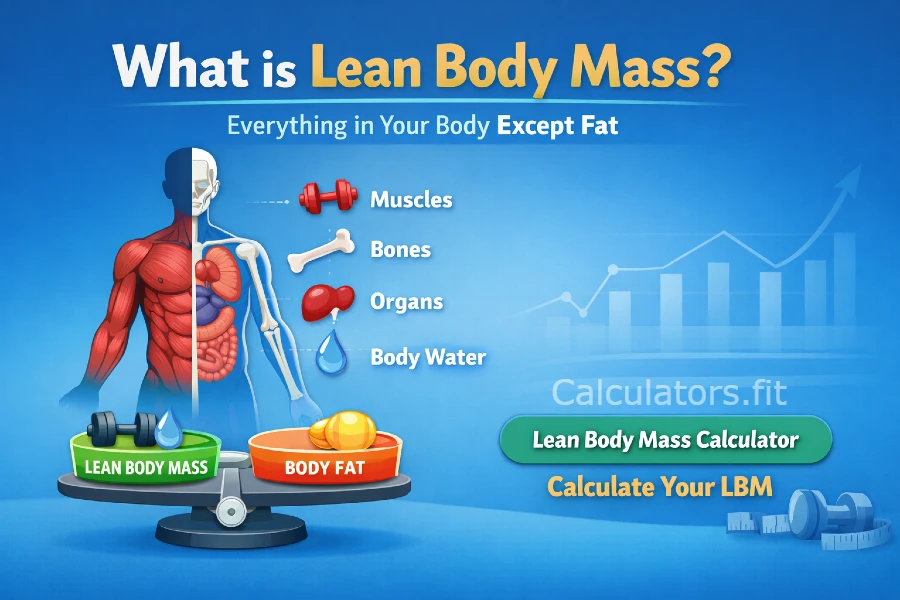
Lean body mass (LBM) is the weight of your body excluding fat. It includes muscles, bones, organs, water, and connective tissue. Lean body mass reflects the parts of your body that keep you strong, active, and healthy.
Body weight alone cannot show the real composition of your body. Two people can weigh the same but look different based on muscle and fat. Lean body mass gives a clear picture of what your body is truly made of.
Understanding Lean Body Mass
Lean body mass represents all functional tissues in your body. Muscles support movement, bones provide structure, organs perform vital functions, and water keeps your body hydrated.
Higher lean body mass often means better strength, energy, and metabolism. It’s why athletes, doctors, and trainers focus on lean mass rather than just scale weight.
Lean Body Mass vs Fat Mass
Your total body weight consists of lean body mass and fat mass. Fat mass is stored body fat, while lean body mass includes all non-fat components.
Even small changes in fat mass can mislead scale readings. Lean body mass helps you understand the real changes in your body.
Why Lean Body Mass Matters
Lean body mass is crucial for strength, health, and metabolism. Muscle tissue burns calories even at rest, so higher lean mass increases your resting metabolic rate.
Maintaining lean body mass supports daily activity, reduces injury risk, and improves fitness outcomes. Low lean mass, especially with age, can lead to weakness and slower metabolism.
Factors Affecting Lean Body Mass
Several factors influence lean body mass:
- Age: Muscle mass naturally declines without resistance training.
- Gender: Males typically have higher lean body mass due to hormones.
- Activity: Strength training preserves and builds lean mass.
- Nutrition: Protein intake supports muscle repair and growth.
- Hydration: Body water forms a large part of lean mass.
How to Calculate Your Lean Body Mass
You can calculate lean body mass using your body weight and body fat percentage:
Lean Body Mass = Body Weight − Fat Mass
Example:
- Weight: 80 kg
- Body fat: 25% → Fat mass: 20 kg
- Lean body mass: 60 kg
If body fat percentage is unknown, formulas like Boer, James, or Hume estimate LBM using height, weight, and gender.
For everyday use, a lean body mass calculator provides fast, accurate results without complex math.
Lean Body Mass and Fitness Goals
Tracking lean body mass helps you:
- Gain muscle efficiently
- Lose fat while preserving muscle
- Understand real progress beyond scale weight
- Set realistic fitness goals
Focusing on lean body mass ensures changes are meaningful and long-lasting.
Who Should Track Lean Body Mass
Understanding lean body mass is useful for:
- Gym beginners
- Athletes
- People trying to lose fat or gain muscle
- Anyone confused by scale weight
Tracking lean body mass gives clarity and motivation that weight alone cannot.
Conclusion
Lean body mass shows what your body is truly made of. It highlights strength, function, and real progress, helping you focus on lasting health and fitness.
Use our Lean Body Mass Calculator to track your progress, make smarter training decisions, and measure results accurately.
Frequently Asked Questions (FAQs)
What is lean body mass in simple terms?
Lean body mass is everything in your body except fat. It includes muscles, bones, organs, water, and connective tissues. It shows the part of your body that keeps you strong and healthy.
Is lean body mass the same as muscle mass?
No. Muscle mass is only one part of lean body mass. Lean body mass also includes bones, organs, water, and connective tissues.
Why is lean body mass important for health?
Lean body mass supports strength, metabolism, and daily activities. Maintaining it improves fitness, energy, and overall health.
Can lean body mass change without weight change?
Yes. You can gain lean body mass and lose fat at the same time. This means your scale weight may not change, but your body becomes healthier and stronger.
Who should track lean body mass?
Anyone focused on fitness, fat loss, or muscle gain should track lean body mass. It gives a clearer view of real body changes than scale weight alone.
How often should I measure lean body mass?
Measuring lean body mass every few weeks or months is enough to track meaningful progress without obsessing over daily changes.
How can I calculate lean body mass easily?
You can use your body weight and body fat percentage to calculate it:
Lean Body Mass = Body Weight − Fat Mass
Or use our lean body mass calculator for instant results.