
Use a body fat calculator to quickly understand how much fat your body carries and what it means for your health and fitness.
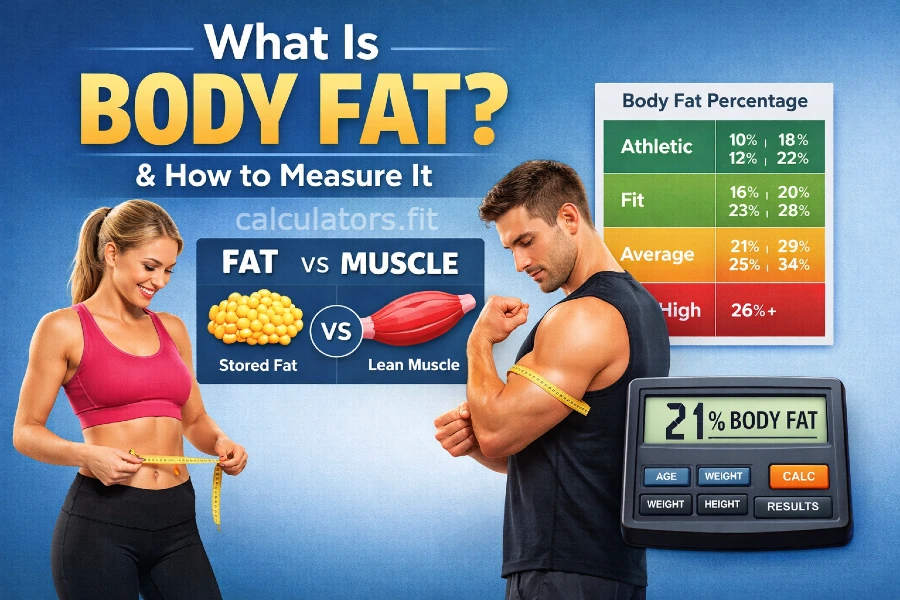
Many people rely only on body weight to judge their fitness. That approach often gives the wrong picture. Two people can weigh the same but look completely different. The difference comes from body fat.
This guide explains what body fat is, why it matters, and how you can measure it correctly in simple terms.
What Is Body Fat?
Body fat is the amount of fat tissue stored in your body. It is a normal and necessary part of human health. Your body uses fat to store energy, protect organs, and support hormones.
Your total body weight includes fat, muscle, bones, water, and organs. Body fat tells you how much of that weight comes only from fat. This makes it far more useful than the number on the scale.
Body fat is usually shown as a percentage. This percentage represents the portion of your body weight made up of fat.
Why Body Fat Matters More Than Scale Weight
The scale cannot tell whether your weight comes from muscle or fat. Because of this, weight alone often creates confusion.
You can lose weight and still have high body fat if you lose muscle. You can gain weight and look fitter if you gain muscle. Body fat explains these changes clearly.
Tracking body fat helps you understand your real progress. It shows whether you are burning fat, gaining muscle, or losing strength. This makes it easier to set realistic fitness goals and avoid unhealthy dieting.
Healthy Body Fat Levels
Healthy body fat ranges depend on gender and age. In general, men carry less essential fat than women.
For most adults, men stay healthy with moderate body fat levels, while women naturally need a higher percentage. Very low body fat may affect energy and hormones, while very high body fat may increase health risks.
The goal is balance, not extreme fat loss.
What Causes High Body Fat?
Body fat increases when the body stores more energy than it uses. This usually happens slowly over time.
Common causes include poor eating habits, low activity levels, lack of sleep, and high stress. Crash dieting often worsens the problem because it reduces muscle instead of fat.
Understanding body fat helps you avoid these mistakes and focus on sustainable improvement.
How to Measure Body Fat
Several methods measure body fat, but not all are practical for everyday use.
Body Fat Calculator
A body fat calculator is the most practical option for most people. It uses basic details such as height, weight, age, gender, and body measurements. The calculator applies proven formulas to estimate body fat percentage.
This method is fast, affordable, and suitable for regular tracking.
Smart Scales
Some digital scales estimate body fat using electrical signals. Results may change with hydration and timing, so they work best for tracking trends rather than exact numbers.
Skinfold and Medical Tests
Skinfold tests and medical scans provide more detailed measurements, but they require equipment, experience, or cost. Most users do not need this level of precision.
How to Calculate Body Fat Using a Calculator
A body fat calculator works by analyzing your body measurements and personal details. After entering the required information, the calculator estimates how much fat your body carries compared to lean mass.
This approach removes guesswork and provides consistent results when used correctly. It also helps you track changes over time instead of focusing on daily weight changes.
Many users pair body fat tracking with lean body mass tracking for better fitness planning.
Body Fat vs BMI
BMI compares height and weight only. It does not measure fat or muscle. Because of this, BMI often mislabels muscular people as overweight and ignores fat levels in others.
Body fat percentage gives a clearer picture of body composition and overall fitness. It explains why two people with the same BMI can look very different.
Common Mistakes When Measuring Body Fat
Many people misunderstand body fat results. The most common mistake is comparing numbers with others instead of tracking personal progress.
Another mistake is measuring too often. Daily changes mostly come from water, not fat. Measuring under different conditions also leads to inconsistent results.
Consistency matters more than perfection.
How Often Should You Measure Body Fat?
Measuring once every one or two weeks works best for most people. Always measure under similar conditions, such as the same time of day and hydration level.
This approach gives reliable trends without unnecessary stress.
Why Tracking Body Fat Improves Fitness Results
Body fat tracking helps you make smarter decisions. It shows whether your plan works and when adjustments are needed. It supports fat loss without sacrificing muscle and helps you avoid unhealthy extremes.
When you understand body fat, you gain control over your fitness journey.
Conclusion
Body fat explains your body better than the scale ever can. It shows the real difference between fat and muscle and helps you make smarter health decisions. When you understand and track body fat, you stop guessing and start progressing.
Use a body fat calculator regularly to measure, track, and improve your body composition with confidence.
Frequently Asked Questions (FAQs)
What is body fat in simple words?
Body fat is the fat stored in your body compared to everything else like muscles and bones.
Is body fat more important than weight?
Yes. Body fat shows what your weight is made of, not just how heavy you are.
Can I measure body fat at home?
Yes. A body fat calculator gives a quick and practical estimate using basic measurements.
How accurate are body fat calculators?
They provide reliable estimates for tracking progress when used consistently.
How often should I check body fat?
Once every one or two weeks gives the best results.