
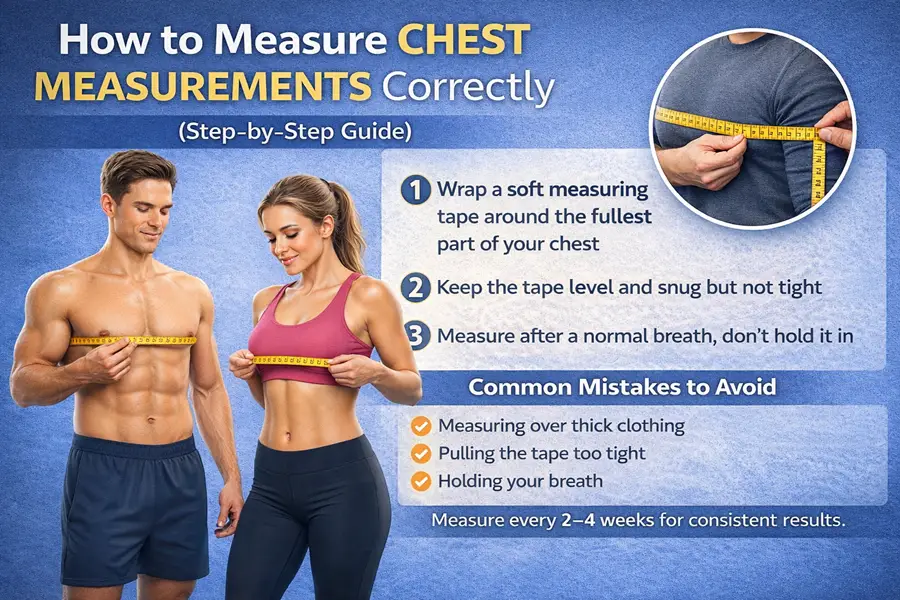
Knowing how to measure chest measurements correctly helps you choose the right clothing size, track fitness progress, and calculate health ratios like waist-to-hip or body composition. A small mistake can lead to wrong results, so learning the correct method matters.
This guide explains everything in simple words so anyone can measure chest size with confidence.
What Are Chest Measurements?
Chest measurements show the distance around the widest part of your chest. This area usually sits just under the armpits and across the fullest part of the chest.
People use chest measurements for:
- Clothing and tailoring
- Fitness tracking
- Body proportion calculations
- Health and posture assessments
Chest size can change with muscle gain, fat loss, or posture. That’s why correct measurement is important.
How Do You Measure Chest Measurements Accurately?
To measure chest measurements correctly, you need a flexible measuring tape and a relaxed posture.
Step-by-Step Method
Stand straight with your shoulders relaxed. Wrap the measuring tape around the fullest part of your chest. Keep the tape flat and level across your back.
Do not pull the tape too tight. It should sit snugly but comfortably. Breathe normally and take the measurement at the end of a natural breath.
Write down the number and repeat once to confirm accuracy.
Where Exactly Should the Tape Go for Chest Measurement?
Place the tape:
- Under the armpits
- Across the widest part of the chest
- Straight across the back
- Parallel to the floor
Avoid placing the tape too high near the shoulders or too low near the stomach. This causes inaccurate readings.
How to Measure Chest Measurements for Men vs Women
The measuring method stays the same, but body shape affects placement.
For men, measure around the broadest part of the chest, usually across the nipples.
For women, measure around the fullest part of the chest while wearing a light, non-padded bra for accuracy.
Using the same method each time helps you track real changes.
Common Mistakes When Measuring Chest Size
Many people measure chest size incorrectly without realizing it.
Avoid these mistakes:
- Pulling the tape too tight
- Holding breath while measuring
- Measuring over thick clothing
- Letting the tape tilt or twist
- Measuring at different positions each time
Small errors can change the result by several centimeters.
Why Chest Measurements Matter for Fitness and Health
Chest measurements help you understand body changes that scale weight cannot show.
They help you:
- Track muscle growth
- Monitor fat loss
- Improve posture awareness
- Support body ratio calculators
- Choose better-fitting clothes
Chest size combined with waist and hip measurements gives a clearer picture of body composition.
How Often Should You Measure Your Chest?
For general tracking, measure once every 2 to 4 weeks. Measuring too often can cause confusion due to daily posture or water changes.
Always measure at the same time of day under similar conditions for consistent results.
Best Tools to Measure Chest Measurements
A soft measuring tape gives the most accurate results. Avoid metal tapes or strings that stretch unevenly.
Digital calculators help store results and show progress over time without manual tracking.
Final Thoughts
Learning how to measure chest measurements correctly helps you track real progress and avoid guesswork. With the right method and consistent tracking, your measurements become reliable and useful.
Frequently Asked Questions
How do you measure chest measurements correctly?
Stand straight and wrap a measuring tape around the fullest part of your chest. Keep the tape level and measure after a normal breath.
Where should the measuring tape sit for chest measurement?
The tape should sit under the armpits and across the widest part of the chest, staying parallel to the floor.
Should you measure your chest while breathing in?
No. Always measure after a normal breath. Holding your breath changes the result.
How tight should the measuring tape be?
The tape should feel snug but not tight. It should not press into your skin.
Can posture affect chest measurement?
Yes. Slouching or pushing the chest out can change the measurement. Stand naturally for accuracy.
Can chest measurements change over time?
Yes. Muscle growth, fat loss, posture, and training can all change chest size.
How often should chest measurements be taken?
Measuring once every two to four weeks gives the most reliable tracking.
Why are chest measurements important?
They help with clothing fit, fitness tracking, and body proportion calculations.