
Many people measure their hips the wrong way. A small mistake can change results and affect calculators like waist-to-hip ratio, body fat, and fitness tracking.
This guide explains how to measure hips correctly, why it matters, and how it supports waist-to-hip ratio calculations, in the simplest way possible.
Why Hip Measurement Is Important
Hip measurement shows the width of the lower body. It plays a key role in understanding body shape and fat distribution.
Correct hip measurement helps:
- Calculate waist-to-hip ratio accurately
- Track body shape changes
- Improve body fat and fitness results
- Avoid wrong calculator outputs
Without accurate hip measurement, even the best calculator gives incorrect results.
How Do You Measure Hips the Right Way?
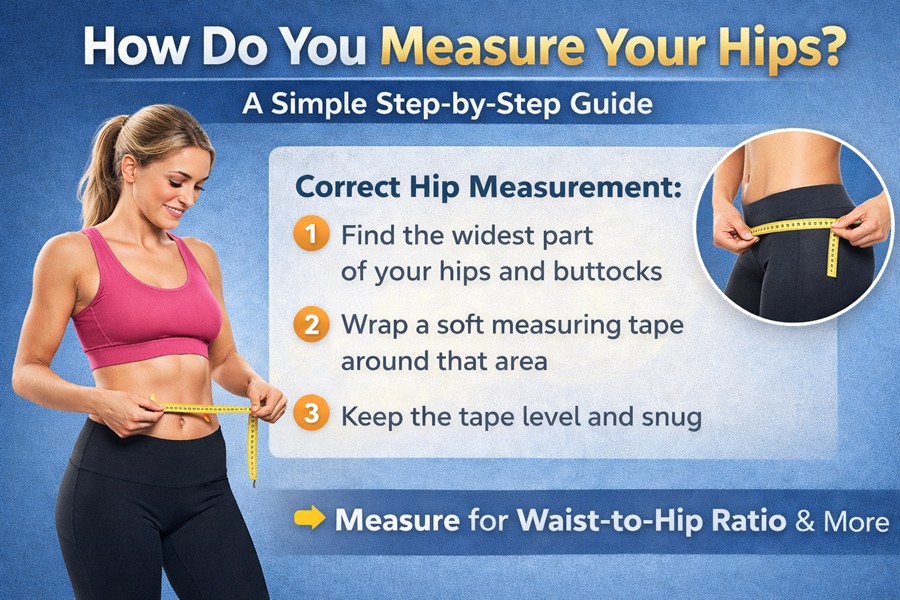
Measuring hips is easy when you follow the correct steps.
Stand straight with your feet together. Relax your body and avoid tightening muscles. Find the widest part of your hips and buttocks. This area is lower than the waist and wider than the hip bones.
Wrap a soft measuring tape around this area. Keep the tape level and parallel to the floor. Make sure it sits snugly but does not press into the skin.
Read the number where the tape meets. Record the measurement in inches or centimeters.
Common Mistakes When Measuring Hips
Many people make small errors that affect accuracy.
Measuring too high near the waist gives wrong results. Pulling the tape too tight reduces the number. Measuring over thick clothing adds extra inches. Standing with feet apart also changes the reading.
Always measure twice to confirm accuracy.
Best Time to Measure Your Hips
Timing matters for consistency.
Measure your hips:
- In the morning if possible
- Before eating heavy meals
- Wearing light clothing or none
- At the same time each day when tracking
Consistency improves long-term tracking accuracy.
How Hip Measurement Supports Waist-to-Hip Ratio
Hip measurement works together with waist measurement to calculate waist-to-hip ratio.
Waist-to-Hip Ratio = Waist Measurement ÷ Hip Measurement
If hip measurement is wrong, the ratio becomes unreliable. Accurate hip measurement ensures the calculator reflects your true body shape.
Use our Waist-to-Hip Ratio calculator after measuring hips correctly for instant results.
Why Waist-to-Hip Ratio Matters
Waist-to-hip ratio shows how fat is distributed in the body. Fat stored around the waist carries higher health risk than fat stored around the hips.
Even if weight stays the same, improving hip-to-waist balance can indicate better fitness progress.
That is why hip measurement is more important than many people realize.
Who Should Measure Their Hips?
Hip measurement is useful for:
- Fitness beginners
- People tracking fat loss
- Users confused by scale weight
- Anyone using body shape or ratio calculators
It is simple, quick, and highly effective.
How Often Should You Measure Your Hips?
You do not need daily measurements.
Measuring once every two to four weeks works well. This helps track real changes without unnecessary stress.
Conclusion
Knowing how to measure hips correctly improves every body measurement that follows. A simple tape measure, correct position, and consistent method make all the difference.
Measure your hips the right way, use a reliable waist-to-hip ratio calculator, and track changes over time. Small improvements lead to better understanding and smarter fitness decisions.
Measure your hips today and check your waist-to-hip ratio with confidence.
How do you measure hips correctly at home?
Stand straight, find the widest part of your hips and buttocks, and wrap a soft measuring tape around that area. Keep the tape level and snug.
Should I measure hips over clothes or skin?
Measuring directly on skin gives the most accurate result. Light clothing is acceptable if needed.
Where exactly should the tape go when measuring hips?
The tape should go around the fullest part of your hips and buttocks, not the waist or hip bones.
Why is hip measurement important for waist-to-hip ratio?
Hip measurement is required to calculate waist-to-hip ratio accurately. Wrong hip size leads to incorrect results.
How often should I measure my hips?
Once every two to four weeks is enough to track real changes.