
Tape measures are commonly used to check height at home, in gyms, clinics, schools, and fitness settings. But many people wonder: are tape measures accurate for measuring height, or do they give misleading results?
The short answer is yes, tape measures can be accurate for height — but only when used correctly and under the right conditions.
This article explains how accurate tape measures are for height, what affects their accuracy, common mistakes, and how to get the most reliable height measurement using a tape measure.
Understanding Height Measurement
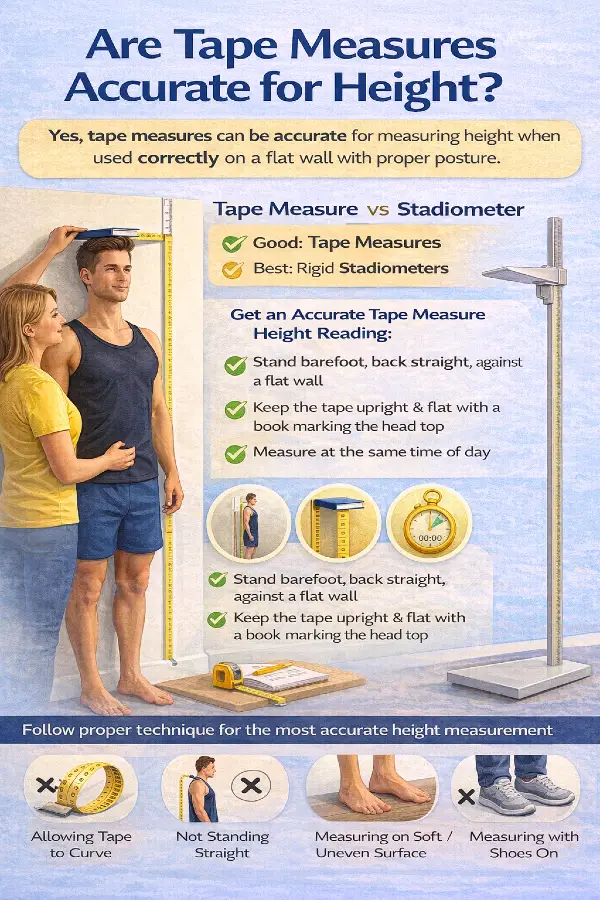
Height is the vertical distance from the bottom of the feet to the top of the head while standing upright. Measuring height sounds simple, but small errors in posture, positioning, or tools can change results by up to several centimeters.
Tape measures are flexible tools designed to measure length. When used properly, they can give very close estimates to clinical height measurements, but they are not completely error-proof.
How Accurate Are Tape Measures for Height?
Tape measures are generally accurate for measuring height within 0.5 to 1 centimeter when used correctly. This level of accuracy is acceptable for:
- Personal tracking
- Fitness and nutrition calculations
- BMI and health calculators
- General health awareness
However, tape measures are slightly less precise than wall-mounted stadiometers used in medical settings.
Accuracy depends more on how the tape measure is used than the tool itself.
What Affects Tape Measure Accuracy for Height?
Several factors influence how accurate a tape measure is when measuring height.
Body Position and Posture
Standing posture plays a major role. Slouching, bending knees, or tilting the head can reduce measured height. Standing fully upright with shoulders relaxed and head straight gives the most accurate result.
Wall Alignment
The tape must be placed perfectly vertical against a flat wall. If the tape is tilted or curved, the height reading will be incorrect.
Head Position
The top of the head should be measured at the highest point, not the forehead or hair. Thick hair, buns, or hairstyles can add false height if not accounted for.
Footwear
Shoes, slippers, or thick socks increase height measurements. Height should always be measured barefoot.
Time of Day
Height naturally changes during the day. People are slightly taller in the morning and shorter at night due to spinal compression. This can cause variations of up to 1–2 cm.
Tape Measure vs Medical Height Tools
Medical professionals usually use stadiometers, which are rigid vertical measuring tools designed specifically for height. These tools minimize error by ensuring straight alignment and consistent head positioning.
Tape measures are slightly less precise because they are flexible and depend on manual positioning. Still, when used carefully, tape measures provide reliable results for non-clinical use.
Common Mistakes When Measuring Height With a Tape Measure
Many inaccurate height readings come from simple mistakes rather than the tape itself.
Some common errors include:
- Measuring alone without assistance
- Letting the tape curve or bend
- Measuring from an uneven floor
- Including hair height
- Not standing straight
- Using a stretched or damaged tape
Avoiding these mistakes significantly improves accuracy.
How to Measure Height Accurately Using a Tape Measure
To get the most accurate height measurement with a tape measure:
- Stand barefoot on a flat, hard surface with heels against a wall.
- Keep your back straight, shoulders relaxed, and head level.
- Place the tape measure vertically against the wall.
- Use a flat object like a book to mark the top of your head at a right angle.
- Read the measurement where the object meets the tape.
Having another person assist improves accuracy even further.
Are Tape Measures Good Enough for BMI and Health Calculations?
Yes. Tape-measured height is accurate enough for BMI, calorie needs, and body mass calculations, especially for online health calculators.
Minor differences of a few millimeters do not significantly affect BMI or metabolic estimates. Consistency matters more than perfection.
Can Tape Measures Give Different Results Each Time?
Yes, small variations can happen. These differences usually come from posture changes, tape positioning, or time of day.
To reduce inconsistency, measure height:
- At the same time of day
- On the same surface
- Using the same method
Tracking trends is more useful than focusing on a single measurement.
Are Digital or Laser Tools More Accurate Than Tape Measures?
Laser height tools and digital stadiometers are slightly more accurate because they reduce human error. However, for most people, the difference is minimal.
A properly used tape measure is still accurate enough for everyday health, fitness, and personal tracking.
Is Measuring Height at Home Reliable?
Measuring height at home using a tape measure is reliable if done carefully. It may not match medical-grade measurements exactly, but the difference is usually small and acceptable for non-clinical purposes.
For official medical records, professional measurement is recommended.
Conclusion
Tape measures can be accurate for measuring height when used correctly. While they are not as precise as medical stadiometers, they provide reliable results for personal health tracking, BMI calculations, and fitness goals. Accuracy depends more on posture, positioning, and consistency than the tape itself.
Used properly, a tape measure is a practical and dependable tool for height measurement.
Are Tape Measures Accurate for Height? (People Also Ask)
Are tape measures reliable for measuring height?
Yes. Tape measures are reliable for height measurement when used correctly against a flat wall with proper posture.
How much error can a tape measure have for height?
Most errors range from 0.5 to 1 cm, usually caused by posture or positioning rather than the tape itself.
Is measuring height at home accurate?
Home height measurement can be accurate if done carefully, barefoot, and using proper technique.
Why does my height change when I measure again?
Height changes slightly during the day due to spinal compression, hydration, and posture differences.
Is a tape measure accurate enough for BMI?
Yes. Tape-measured height is accurate enough for BMI and health calculators.
FAQs – Are Tape Measures Accurate for Height?
-
Are tape measures accurate for height?
Yes, when used correctly, tape measures provide accurate height measurements for everyday use.
-
Can posture affect height measurement?
Yes. Slouching or bending can reduce measured height by several centimeters.
-
Should I measure height in the morning or evening?
Morning measurements are slightly taller, but consistency matters more than timing.
-
Is a metal tape more accurate than a fabric one?
Metal tapes are generally more stable, but both can be accurate if not stretched or damaged.
-
Do doctors use tape measures for height?
Doctors usually use stadiometers, but tape measures can still give reliable results for non-clinical purposes.