
Mass in the body refers to the total amount of matter that makes up a human body. This includes everything inside the body such as muscles, fat, bones, organs, fluids, and tissues. In simple terms, body mass is the complete physical substance of a person measured as a whole.
When people talk about body weight in daily life or health discussions, they are usually referring to body mass.
Understanding Body Mass in Simple Words
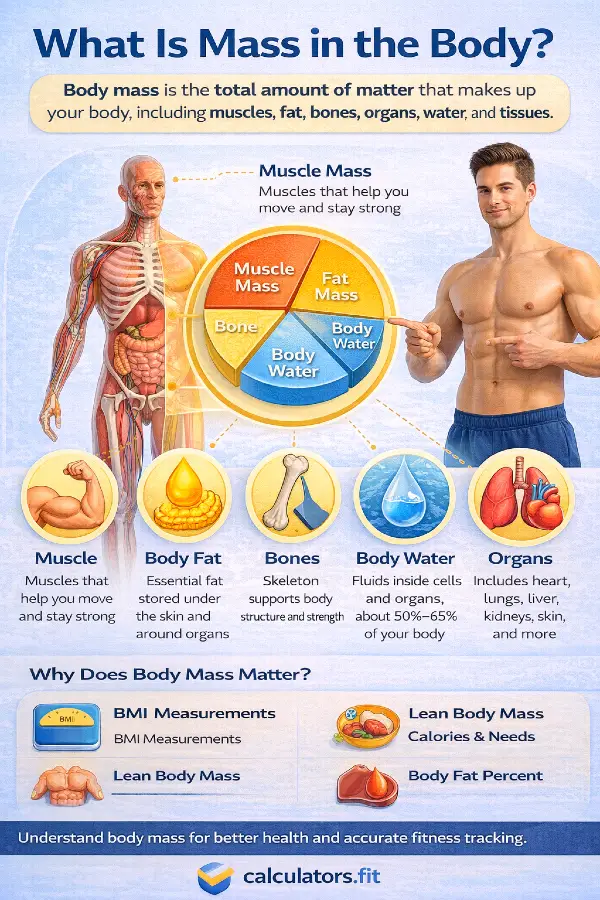
Body mass is not just fat or muscle alone. It represents everything that contributes to your body’s total size and weight. Whether you gain muscle, lose fat, or even retain water, your body mass changes accordingly.
Body mass is commonly used in health measurements because it provides a basic reference point for understanding body size and overall physical structure.
What Does Body Mass Include?
Body mass is made up of multiple components working together. These include:
- Muscle tissue
- Body fat
- Bones
- Internal organs
- Body water and fluids
Each of these components plays a role in your overall mass. That is why two people with the same body mass can look very different depending on how that mass is distributed.
Body Mass vs Body Weight
Body mass and body weight are often used interchangeably, but they are slightly different in scientific terms. Body mass refers to the amount of matter in the body, while body weight is how heavy that mass feels due to gravity.
In health, fitness, and medical settings, both terms usually point to the same scale measurement, so for most people, the difference is not noticeable.
Why Body Mass Is Important for Health
Body mass helps professionals understand body size and create health assessments. It is commonly used to calculate measurements such as Body Mass Index (BMI), calorie needs, and metabolic estimates.
However, body mass alone does not show how healthy someone is. It must be considered alongside other factors such as body fat percentage, muscle mass, and waist measurements.
Can Body Mass Change Without Fat Gain?
Yes, body mass can change even if body fat stays the same. Muscle gain, water retention, and bone density improvements can all increase body mass without increasing fat. Similarly, dehydration or illness can temporarily reduce body mass.
This is why short-term changes on the scale do not always reflect true physical progress.
Why Does Body Mass Fluctuate Daily?
Daily fluctuations in body mass are completely normal. These changes happen due to food intake, digestion, hydration levels, sodium intake, and hormonal shifts.
A one-day increase or decrease in body mass does not automatically mean fat gain or loss. Long-term trends are more meaningful than daily numbers.
Is Body Mass a Good Indicator of Health?
Body mass alone is not a complete health indicator. It shows size, not composition. Someone with higher muscle mass may have a higher body mass but still be very healthy.
For accurate health evaluation, body mass should be combined with other measurements such as:
- Body fat percentage
- Lean body mass
- Waist circumference
- Physical activity level
How Is Body Mass Measured?
Body mass is measured using a weighing scale. The scale shows the combined weight of all body components, including fat, muscle, bones, organs, and fluids.
More advanced tools can estimate how body mass is distributed, but the scale remains the most basic method.
Why Health Calculators Use Body Mass
Health calculators use body mass because it provides a starting point for many calculations. When combined with height, age, and gender, body mass helps estimate BMI, calorie needs, lean mass, and metabolic rates.
This makes body mass a foundational value in many health-related tools.
Common Misunderstandings About Body Mass
Many people believe body mass means only fat or that higher mass automatically means poor health. This is not true. Body mass includes multiple components, and health depends on balance rather than just size.
Understanding body mass correctly helps avoid confusion and unhealthy assumptions.
Conclusion
Body mass is the total amount of matter in the human body, including muscles, fat, bones, organs, and fluids. It represents overall body size but does not explain body composition on its own. For accurate health insights, body mass should be used together with body fat and lean mass measurements.
What Is Mass in the Body? (People Also Ask)
What does mass in the body mean?
Mass in the body means the total amount of matter that makes up your body. It includes muscles, fat, bones, water, organs, and tissues combined into one value. When people talk about body weight, they usually mean body mass.
What is considered body mass?
Body mass includes everything inside your body that has weight. This covers muscle tissue, body fat, bones, internal organs, and body water. It does not focus on one part alone, such as fat or muscle.
Is body mass the same as weight?
Body mass and body weight are closely related. Body mass is the amount of matter in your body, while body weight is how heavy that mass feels under gravity. In health and fitness, both terms usually refer to the same scale number.
What is the difference between body mass and body fat?
Body mass is the total weight of your entire body, while body fat is only the fat stored in your body. Body mass includes fat, muscle, bones, water, and organs. This is why two people with the same body mass can look very different.
Can body mass change without gaining fat?
Yes. Body mass can increase due to muscle gain, water retention, or bone strength improvements. It can also decrease due to fat loss or changes in hydration. Not all body mass changes come from fat.
Why does body mass fluctuate daily?
Body mass changes daily because of water levels, food intake, digestion, and hydration. These short-term changes are normal and do not always reflect real fat or muscle changes.
Is body mass a good indicator of health?
Body mass alone does not show overall health. It shows body size but not body composition. For better health understanding, body mass should be used together with body fat percentage, lean mass, and measurements like waist size.
How is body mass measured?
Body mass is measured using a weighing scale. The scale shows the combined weight of all body components, including fat, muscle, bones, water, and organs.
Why do health calculators use body mass?
Health calculators use body mass because it provides a basic starting value. Body mass helps estimate BMI, calorie needs, lean body mass, and other health metrics when combined with height, age, and gender.
PAA-Quick Summary
Body mass is the total amount of matter in the body, including muscles, fat, bones, water, and organs. It is measured as weight but does not explain body composition on its own. For accurate health tracking, body mass should be combined with body fat and lean mass measurements.
What Is Mass in the Body – FAQs
-
What does mass in the body mean?
Mass in the body means the total physical matter that makes up a person, including muscles, fat, bones, organs, and fluids.
-
Is body mass the same as body fat?
No. Body mass includes all components of the body, while body fat refers only to stored fat tissue.
-
Can body mass increase without weight gain?
Body mass and weight usually change together, but increases can come from muscle growth or water retention rather than fat.
-
Why is body mass used in BMI?
Body mass is used in BMI because it helps estimate body size relative to height, making it useful for general health screening.
-
Does body mass show fitness level?
Body mass alone does not show fitness. A person’s fitness depends on muscle strength, endurance, and body composition, not just mass.