
You can check your weight without a scale by tracking visible and measurable changes in your body. Your body shows clear signs when weight changes happen, and these signs help you understand whether your weight is increasing, decreasing, or staying stable.
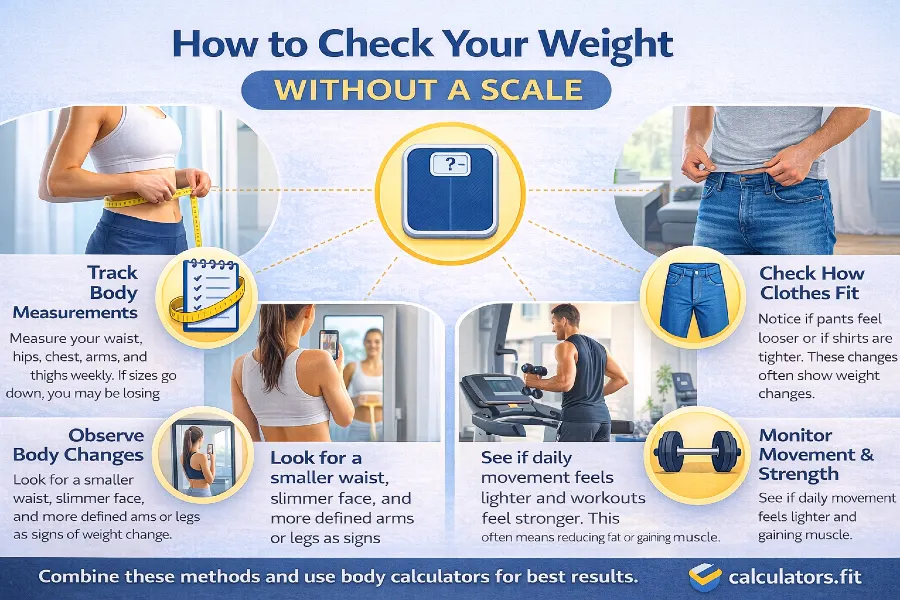
This guide explains exact methods you can use at home to check your weight without a scale, in a simple and accurate way.
Track Weight Changes Using Body Measurements
Body measurements are one of the most reliable ways to check weight changes without a scale. When body weight changes, the size of different body parts changes as well.
Use a measuring tape and measure areas such as your waist, hips, chest, arms, and thighs. Measure the same points every time and try to do it at the same time of day for consistency.
If your measurements reduce over time, it shows that your body weight is decreasing. If they increase, it indicates weight gain. Even small changes in measurements reflect real body changes.
These measurements can be used with body measurement or waist-related calculators on our calculators section to better understand your progress.
Observe How Your Clothes Fit on Your Body
Clothing fit provides instant feedback about weight changes. When your weight changes, clothes react before numbers do.
If your pants feel looser around the waist or hips, your body size has reduced. If shirts fit tighter around the chest or stomach, your body size has increased. Belts, buttons, and zippers also give clear signals.
Checking the fit of the same clothes regularly helps you track changes accurately without guessing.
Notice Changes in Your Body Shape and Appearance
Your body shape changes as your weight changes. These changes are often easy to see when you observe your body carefully.
Pay attention to your waistline, stomach shape, arms, legs, and face. A slimmer waist or more defined arms usually indicate weight reduction. A fuller appearance may indicate weight gain.
Taking progress photos every two weeks helps you compare changes clearly. Use the same angle, posture, and lighting to avoid confusion.
Monitor Your Physical Movement and Strength
Weight changes affect how your body moves during daily activities.
If you notice that walking, bending, climbing stairs, or exercising feels easier, your body weight may be reducing. If movements feel heavier or slower, your body weight may be increasing.
Strength levels also reflect changes. Increased strength often comes with muscle gain, which may increase body weight while still improving body shape.
Use Body Fat and Lean Mass Estimates
Weight changes often come from changes in fat or muscle. Estimating body fat or lean mass helps you understand these changes more clearly.
You can estimate these values using your height, age, and body measurements. Tools like body fat, lean body mass, BMI, or BWI calculators help convert physical data into meaningful insights.
These tools support weight tracking without requiring a scale.
Pay Attention to Daily Body Signals
Your body gives subtle signals that reflect weight changes over time. Sitting comfort, waist pressure, ease of movement, and overall physical comfort can indicate changes in body size.
Tracking these signs weekly helps you identify trends instead of focusing on daily fluctuations.
Combine Methods for Accurate Weight Tracking
No single method gives a complete picture. Combining multiple methods improves accuracy.
The most effective approach includes measuring your body, checking clothing fit, observing body shape, tracking physical movement, and using body composition calculators together.
This combination creates a smooth and reliable way to check your weight without a scale.
Final Conclusion
You can check your weight without a scale by understanding how your body looks, feels, and moves. Body measurements, clothing fit, physical movement, and body composition estimates work together to show real progress.
Stay consistent, track changes over time, and use the tools on calculators.fit to support your weight-tracking journey with confidence.
FAQs: How to Check Your Weight Without a Scale
-
How can I check my weight at home without a scale?
You can check your weight by tracking body measurements, noticing how your clothes fit, observing changes in body shape, and monitoring how your body feels during daily activities. These methods show clear weight trends over time.
-
Are body measurements accurate for checking weight changes?
Yes. Measuring areas like the waist, hips, chest, arms, and thighs helps you track changes in body size, which directly reflects weight changes when done consistently.
-
How often should I check my weight without a scale?
Check once a week or every two weeks. This frequency helps you see real progress without getting confused by daily body changes.
-
Can I track weight loss or gain without numbers?
Yes. Changes in clothing fit, body shape, physical movement, and comfort level all indicate whether your weight is decreasing, increasing, or staying stable.
-
Do body fat and lean mass matter when checking weight?
Yes. Weight changes often come from fat loss or muscle gain. Using body fat or lean body mass calculators helps you understand what type of weight change is happening.
-
Can calculators help if I don’t use a scale?
Yes. Measurement-based calculators on calculators.fit can estimate body fat, lean mass, BMI, or BWI using height, age, and body measurements.
-
Is checking weight without a scale reliable?
When you track multiple signs together—measurements, clothes, appearance, and movement—it becomes a reliable way to understand long-term weight trends.